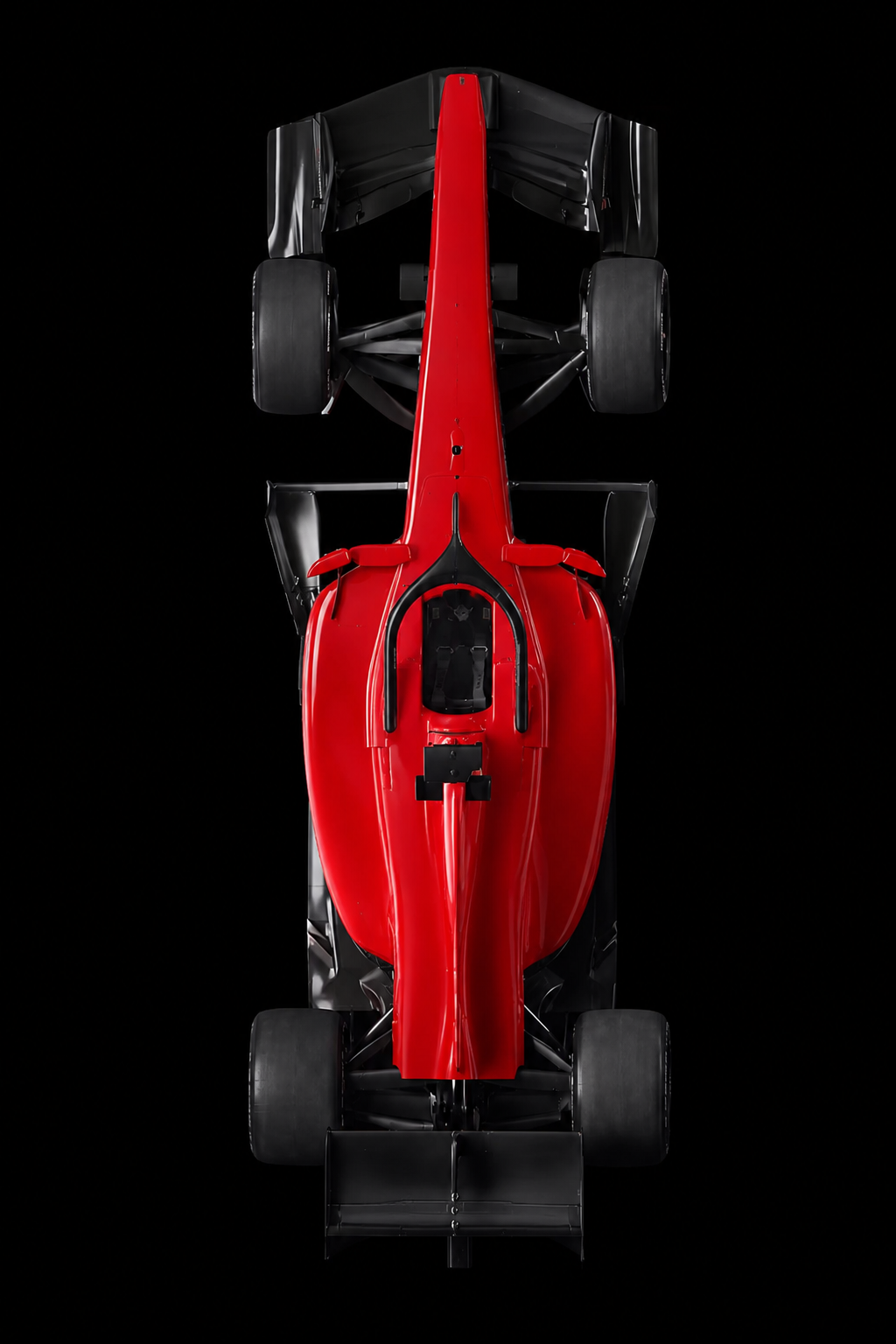
Formula 1's world championship began in 1950 with seven European rounds and Alfa Romeo dominance. Eight decades later the calendar spans five continents and capitals engineering at aerodynamic factories. The through-line is not continuous evolution — it is a series of regulation eras that reset the competitive order.
1950
First championship
Silverstone inaugural round
24
Rounds today
Calendar peak in modern era
10
Teams typically
Two-car entries each
Era map: when the rules changed everything
| Era | Approx. years | Defining change |
|---|---|---|
| Front-engine | 1950s | Drum brakes, narrow tyres, driver as hero |
| Rear-engine revolution | 1960s | Lotus-style packaging; British garagistes |
| Wings and safety | 1970s–80s | Downforce; growing safety after tragedies |
| Turbo | 1980s | Qualifying engines; extreme power spikes |
| NA + refuelling | 1990s–2000s | Schumacher era; pit strategy peak |
| Hybrid V6 | 2014–2021 | Efficiency; Mercedes dominance cycle |
| Ground effect return | 2022– | Venturi floors; closer racing intent |
What the numbers show about dominance
Dominant teams cluster in regulation windows: Ferrari in early 2000s, Red Bull in early 2010s and early 2020s, Mercedes across hybrid maturity. The data pattern is consistent — first mover on a major reg change with stable operational base, then field compression within 3–4 seasons as concepts converge.
“History is best read as lap-time and points-share trends — not highlight reels.”
Safety and sporting evolution
Halo introduction, HANS devices, circuit runoff standards, and fuel-flow limits each changed what drivers could push. Lap times still fell because aerodynamics and tyres advanced — but fatality rates dropped orders of magnitude. Any historical pace comparison must acknowledge safety-driven circuit and car changes.
Using history on Debrief
Debrief's history and records views apply season-aware points context so you can explore drivers, circuits, and champions without treating 1976 and 2016 as identical scoring environments. Start from regulation era, then drill into driver and circuit pages for the micro story.
Key takeaways
- F1 history divides into regulation eras, not decades alone.
- Dominance follows major rule changes; convergence follows.
- Raw statistics without era context mislead.
- Safety and sporting rules shaped pace as much as wings and engines.